


Battery Boost vs. Battery Replacement: Does Your Car Need a New Battery?

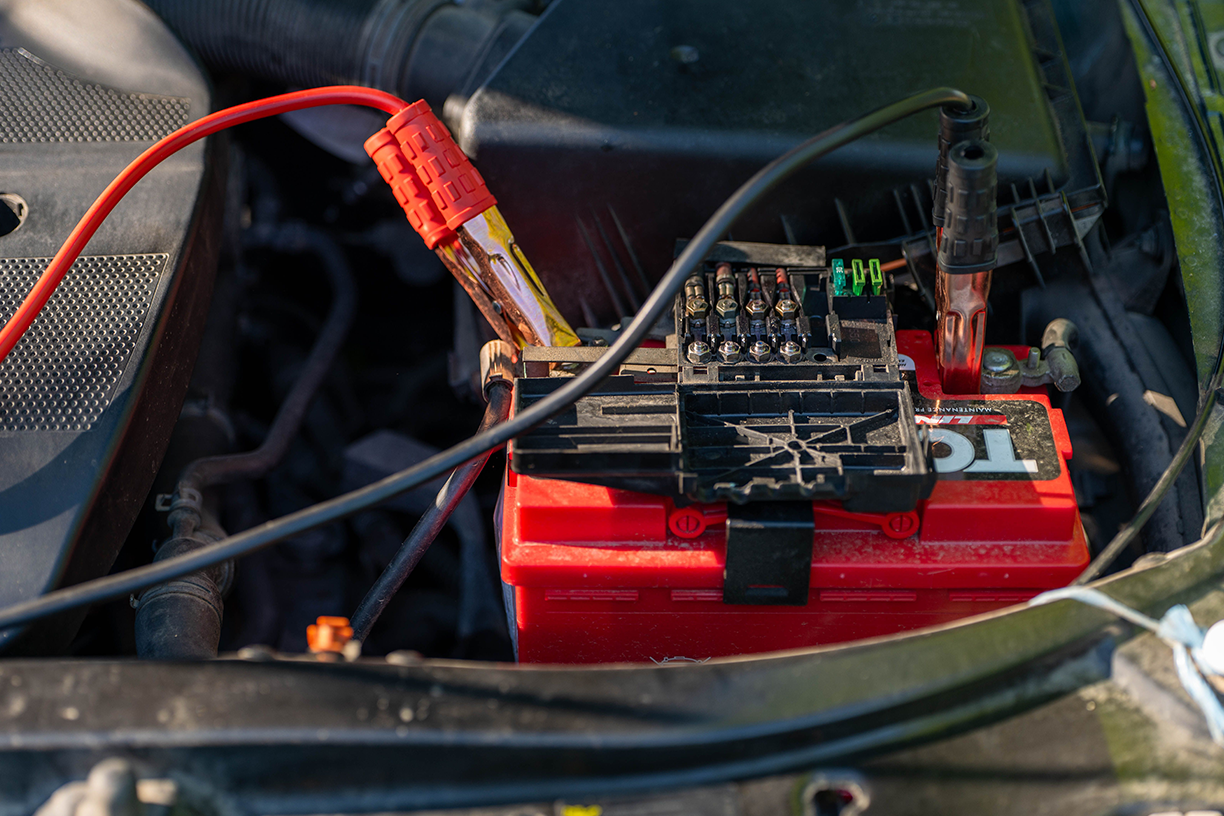
Nothing but a click when you turn the key. A boost can often get you moving again in minutes — but here's the part many drivers miss: a boost can start your vehicle without fixing the reason it wouldn't start in the first place.
What a Boost Actually Does
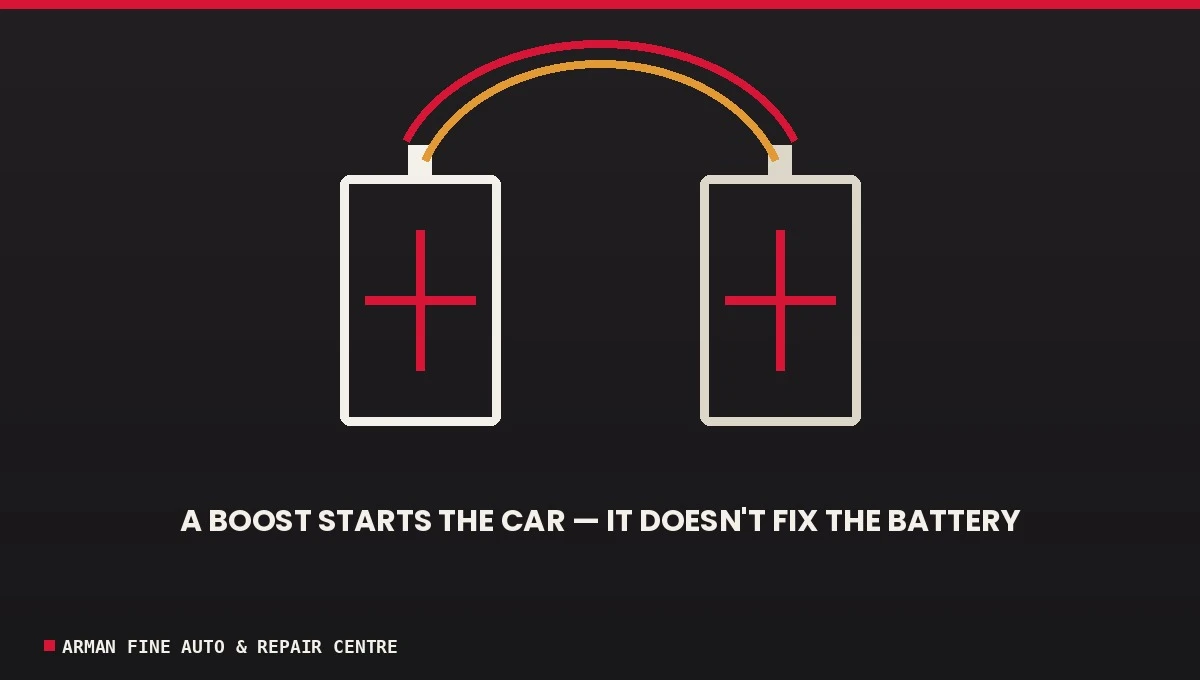
A jump-start temporarily supplies enough power to crank the engine — nothing more. In other words, it doesn't recharge or repair a weak battery. Once running, your charging system takes over and can replenish some of the battery's charge, but that doesn't mean the battery itself is healthy.
When a Boost Is Probably All You Need
- You accidentally left the lights or an accessory on
- The battery is relatively young (roughly 1–2 years)
- The engine cranks normally right after the boost
- A proper battery test comes back healthy
When It's Time for a Real Replacement
- You've needed a boost more than once recently
- The engine cranks slowly, even when warm
- The battery is roughly 3–5+ years old
- The battery is swollen, cracked, or leaking
- A proper test says the battery has failed
Battery or Alternator — Which One Is Actually Bad?
This trips up a lot of drivers. The battery provides the power to start the car. Meanwhile, the alternator recharges the battery once the engine is running. If your battery keeps going dead even after replacement, the real culprit may be a failing alternator that never recharges it properly — or a starter issue that has nothing to do with the battery at all. Ultimately, a proper battery-and-charging-system test is the only reliable way to tell them apart.
| Situation | Likely Next Step |
|---|---|
| Lights left on overnight | Boost, then test the battery |
| Repeated no-starts | Diagnose battery and charging system |
| Battery is 3–5+ years old and struggling | Test; replacement likely appropriate |
| Engine cranks slowly | Battery / starting-system diagnosis |
| Battery is swollen or leaking | Do not boost — professional inspection |
Why Canadian Winters Expose a Weak Battery
Cold weather reduces a battery's ability to deliver starting power at the exact moment your engine needs more effort to crank. As a result, that combination is why a battery that seemed "fine" in October can suddenly fail during the first real cold snap. If your battery is a few years old and has been cranking a little slower lately, don't wait for January to find out whether it'll survive winter — see our guide, How Long Does a Car Battery Last?
Never attempt to boost a battery that is visibly swollen, cracked, leaking, or frozen. Instead, that calls for a professional inspection, not booster cables.
Tired of Wondering If It'll Start Tomorrow?
We'll test your battery and charging system properly — not just glance at a voltage reading — and tell you honestly whether you need a boost, a repair, or a replacement.
Serving North York, Toronto, Vaughan, and the Greater Toronto Area.
Book A Battery CheckFrequently Asked Questions
Can a battery boost fix a dead battery?
It can start the vehicle, but it does not repair a battery that has actually failed. In that case, if it keeps happening, the battery likely needs replacing.
How do I know if it's the battery or the alternator?
Testing is the only reliable way — a failing alternator can drain even a healthy battery, so replacing the battery alone won't always solve it.
How often should a car battery be replaced?
Most last about 3 to 5 years, but climate, driving habits, and battery quality can shorten or extend that.
Is it bad to keep boosting a car?
Yes — repeated boosts without finding the underlying cause just delays a diagnosis you'll eventually need anyway.