


Synthetic vs. Conventional Oil: Which Is Better for Your Car?

Ask three drivers whether synthetic or conventional oil is "better" and you'll get three different answers. The truth is there isn't one oil that's automatically right for every engine — the correct choice depends on your vehicle, manufacturer specification, climate, and how you actually drive.
Whether you're commuting through North York, crawling through traffic in Toronto, or logging highway kilometres out to Vaughan, the oil circulating through your engine is doing more work than most drivers realize. So here's how to make an informed call instead of guessing.
Conventional vs. Full Synthetic: The Real Difference
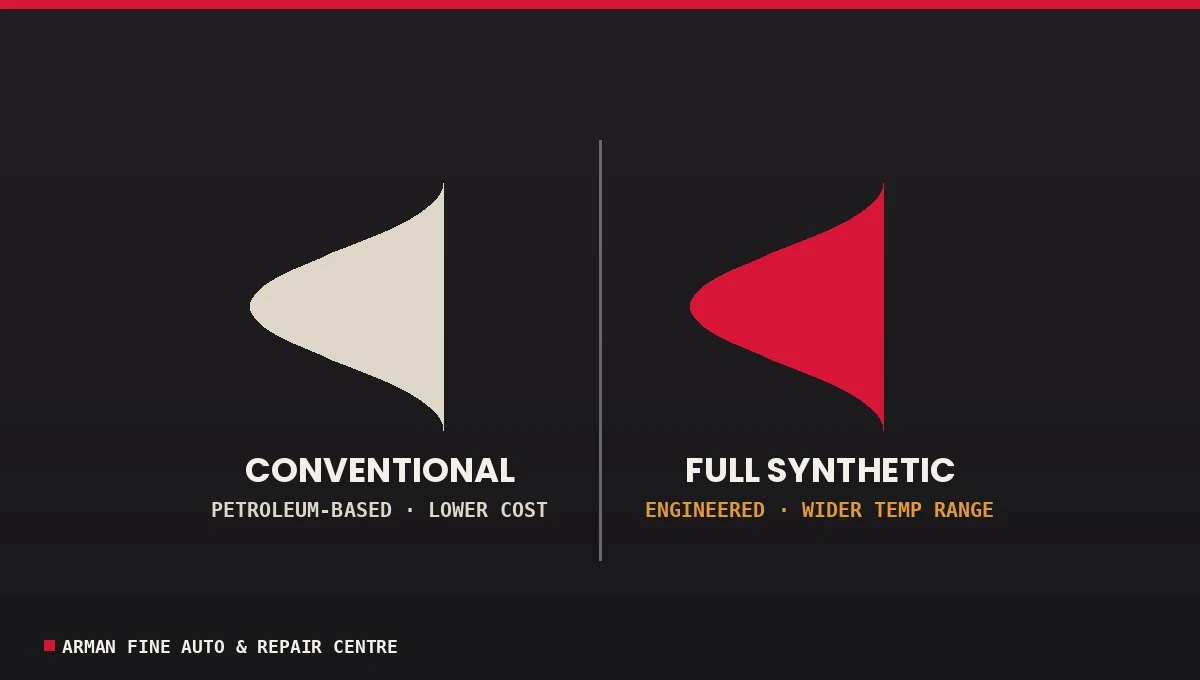
Conventional oil is refined from crude petroleum and blended with additives. It's less expensive, widely available, and still a perfectly reasonable choice for older engines whose manufacturer permits it.
Full synthetic oil is engineered for more consistent performance across a wider temperature range — better cold-start flow, stronger resistance to heat breakdown, and often longer service intervals where the manufacturer allows it. That said, it doesn't make an engine invincible and still needs to be changed on schedule.
| Feature | Conventional Oil | Full Synthetic Oil |
|---|---|---|
| Base oil | Petroleum-based | Engineered base oils |
| Typical price | Lower | Higher |
| Cold-weather performance | Good, depending on formulation | Generally excellent |
| High-temp stability | Good | Generally stronger |
| Modern engine suitability | Depends on manufacturer | Commonly specified |
| Service intervals | Standard | Often longer, if permitted |
The most important row isn't price — it's what your manufacturer's owner's manual actually specifies. In other words, that comes before cost, and before whichever oil the last shop happened to have on the shelf.
What About Synthetic Blend Oil?
Synthetic blend sits in the middle: part conventional, part synthetic base oil, aiming for some of synthetic's benefits at a lower price. This can be a practical compromise — but the deciding question is always the same one: does the oil meet the specification your engine requires?
Why Canadian Winters Change the Answer
Cold weather thickens motor oil, which can make it harder for an engine to circulate oil immediately after startup. As a result, manufacturers increasingly specify low-viscosity synthetic formulations for newer engines.
Numbers like 0W-20 or 5W-30 describe viscosity, not "weight" — the number before the W is cold-temperature flow, the number after is viscosity at operating temperature. Never assume thicker automatically means better protection; the correct viscosity is whatever your manufacturer specifies.
Does Synthetic Oil Last Longer, Improve Fuel Economy, or Clean Your Engine?
Synthetic oil can support longer intervals when the manufacturer permits it — but driving conditions (short trips, heavy idling, towing, rideshare use) can shorten that regardless of oil type.
In addition, synthetic oil can modestly support fuel efficiency in engines designed around low-viscosity oils, but tire pressure and driving habits usually matter more. However, while synthetic additive packages help control deposits, no oil is still a substitute for addressing existing sludge or mechanical problems.
Can You Switch Between Oil Types?
In most vehicles where synthetic oil meets the required specification, switching is generally safe — synthetic oil does not "damage" an engine simply because it previously ran conventional oil. If an older engine already has leaks or excessive oil consumption, though, changing oil type won't solve that underlying issue. That said, a professional inspection can confirm what's really going on.
Rule of thumb: check your owner's manual first, confirm the required viscosity and specification, then factor in your climate and driving conditions — not the price tag.
Which Oil Should You Choose?
- Your manufacturer permits conventional oil
- You follow the recommended maintenance schedule
- Cost is an important factor
- Your driving conditions are relatively normal
Consider full synthetic instead when your manufacturer specifies it, your engine is a modern high-efficiency design, you regularly drive in extreme cold or heat, or you put high mileage on the vehicle for work or rideshare driving.
Signs It's Time for an Oil Change
Don't wait for a problem to show up before checking your oil. Watch for an illuminated oil warning light, unusual engine noise, a burning-oil smell, visible leaks, dark or gritty oil, or reduced performance. If the oil-pressure warning light comes on while driving, safely stop — that can signal a serious mechanical issue, not just an overdue change.
For a deeper look at how often to actually change your oil based on your driving conditions, see our guide: How Often Should You Change Your Oil?
Not Sure Which Oil Your Vehicle Needs?
Arman Fine Auto & Repair Center can confirm the correct oil specification and viscosity for your exact vehicle before any work is performed.
We serve drivers across North York, Toronto, Vaughan, and the Greater Toronto Area with honest, straightforward maintenance advice.
Book An Oil ChangeFrequently Asked Questions
Is synthetic oil really better than conventional oil?
In many cases synthetic oil offers more consistent performance across a wider temperature range, but the right choice always depends on what your vehicle manufacturer specifies.
Can I mix synthetic and conventional oil?
Generally yes in a pinch, but it's best to stick with one type that meets your manufacturer's specification for consistent, predictable performance.
Does synthetic oil really last longer?
It can, when your manufacturer permits an extended interval — but severe driving conditions can shorten that regardless of oil type.