


All-Season vs. Winter Tires: Which Is Better for Canadian Winters?

Every fall, the same question comes up: keep driving on all-season tires, or switch to dedicated winter tires? The honest, short answer for Ontario winters is that dedicated winter tires generally provide better cold-weather traction than all-season tires — and the biggest reason isn't snow. It's temperature.
Why Temperature Matters More Than Snow
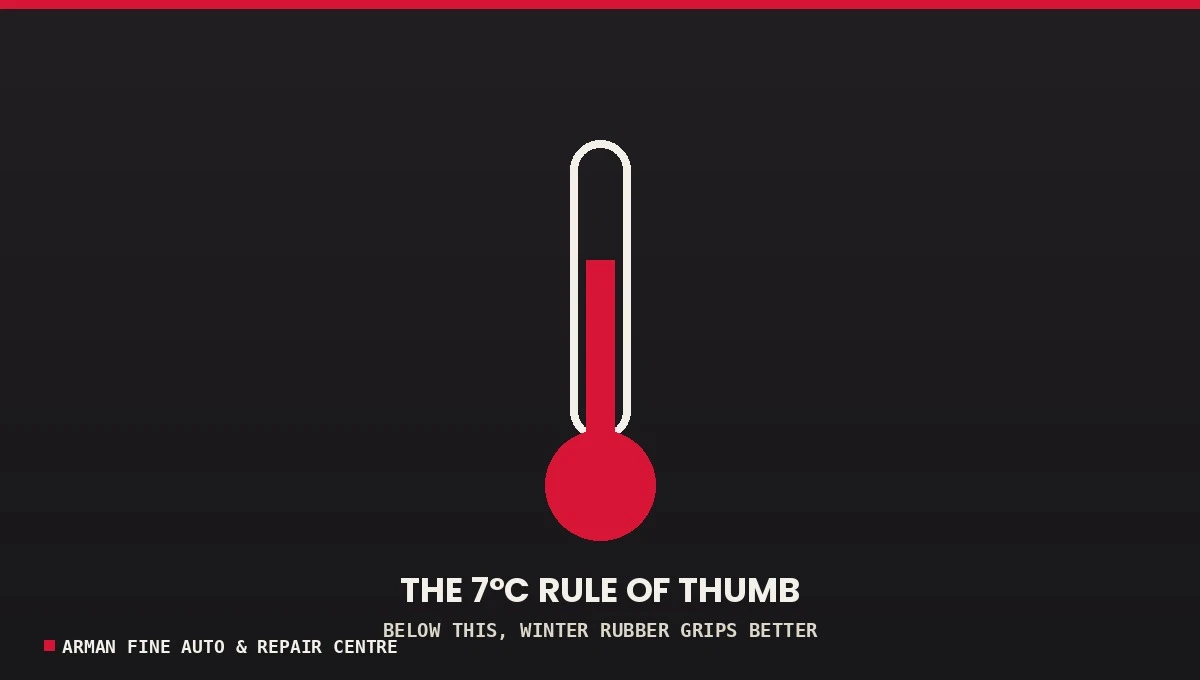
Winter tires are formulated with rubber that stays flexible in the cold, so the tread keeps gripping the road. All-season rubber tends to stiffen as temperatures drop, which reduces grip — even on dry, clear pavement. In practice, many tire professionals use roughly 7°C as a practical seasonal guideline for when winter-oriented rubber starts pulling ahead.
All-Season vs. Winter vs. All-Weather
| Feature | All-Season | Winter | All-Weather |
|---|---|---|---|
| Warm-weather driving | Very good | Not optimized | Good |
| Snow & ice | Moderate | Excellent | Strong |
| Cold-weather flexibility | Moderate | Excellent | Good |
| Year-round use | Yes | No | Yes |
| 3PMSF snowflake rating | Rarely | Yes | Often |
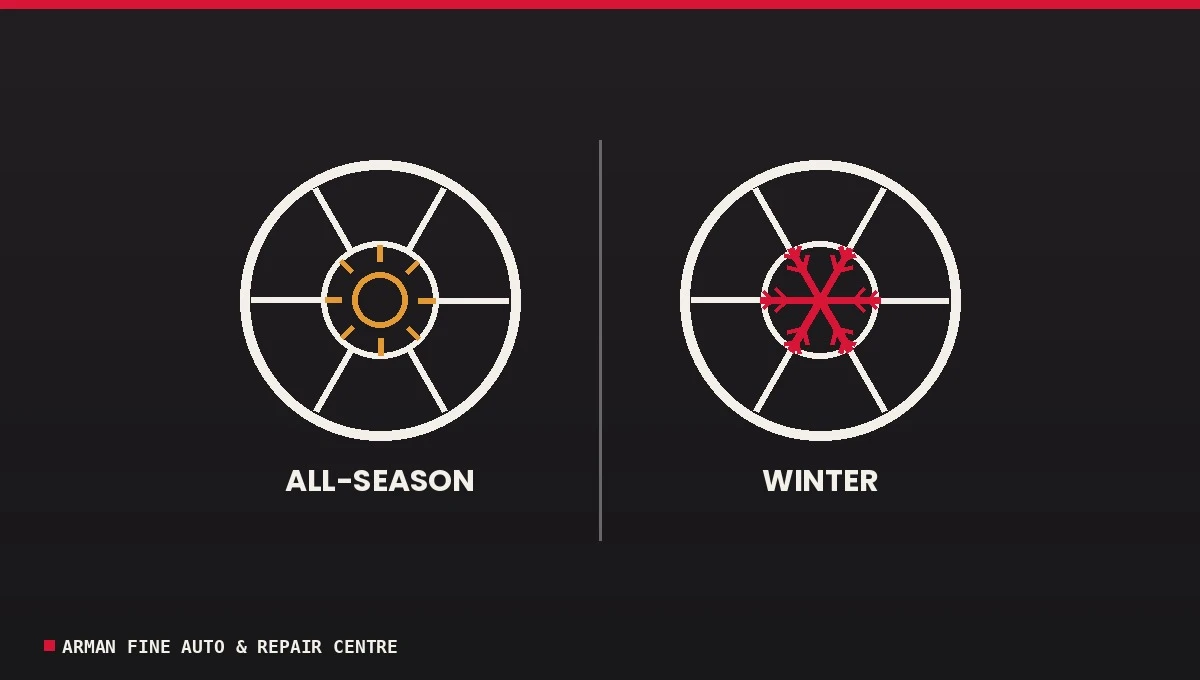
All-weather tires (look for the Three-Peak Mountain Snowflake symbol) split the difference — stronger winter performance than a standard all-season, without a seasonal swap. They're a reasonable one-set option. However, a dedicated winter tire still has the edge in demanding conditions.
Does AWD or 4WD Replace Winter Tires?
No. All-wheel drive helps you accelerate, but it does nothing for braking or cornering grip — that's entirely down to the tires. In other words, an AWD vehicle on worn all-season tires can still struggle on ice, while a front-wheel-drive car on quality winter tires often handles winter roads more confidently.
When to Swap
Don't wait for the first snowfall — watch the temperature trend instead. Once daytime temperatures are consistently approaching or dropping below 7°C, it's time to book your changeover, before every tire shop in the GTA gets slammed. Similarly, swap back once warm weather is here to stay; winter compounds wear faster on hot pavement.
- Tire type matches expected conditions
- Tread depth is sufficient
- Tire pressure checked (cold weather lowers it)
- No cracking, bulges, or sidewall damage
- Wheel balance and alignment are in good shape
- Seasonal changeover booked before the first storm
For example, rideshare and high-mileage drivers put considerably more braking, cornering, and highway kilometres on their tires — making tire condition and seasonal readiness even more important. See our Uber & Lyft driver guide for more.
Thinking About Your Next Set of Tires?
If you're comparing brands and prices rather than just chasing the cheapest listing, our tire-focused wing TireShop.world is quickly becoming one of the go-to spots for tire shopping in Toronto and North York.
In fact, it offers the same straight-talk service as Arman Fine Auto, with a sharper focus on helping you find the right tire for your vehicle and budget instead of just the cheapest one on the shelf.
Ready for Your Seasonal Tire Changeover?
Arman Fine Auto & Repair Center handles mounting, balancing, and alignment checks for both all-season and winter tire sets.
We proudly serve North York, Toronto, Vaughan, and the wider GTA.
Book Your Tire ServiceFrequently Asked Questions
Do I really need winter tires if I have all-wheel drive?
Yes — AWD helps you accelerate, but braking and cornering grip depend entirely on the tires themselves.
What temperature should I switch to winter tires?
A common rule of thumb is when temperatures consistently sit at or below approximately 7°C.
Can I drive on winter tires all year?
You can, but warm pavement wears winter compounds faster and can change how the vehicle handles — it's best to swap back once winter has passed.