





Tire Rotation Guide: Why Regular Tire Rotations Can Save You Money

Your tires are one of the hardest-working parts of your vehicle. Every time you accelerate, brake, or turn, your tires handle thousands of kilograms of force while maintaining traction with the road. Over time, this constant stress causes them to wear unevenly.
Fortunately, one of the easiest ways to extend the life of your tires and improve your vehicle's performance is through regular tire rotations.
Whether you're commuting through North York, driving across Toronto, traveling to Vaughan, or using your vehicle for Uber, Lyft, or delivery services, routine tire rotations help maximize tire life, improve safety, and reduce long-term maintenance costs.
At Arman Fine Auto & Repair Center, we recommend tire rotations as part of every vehicle's preventative maintenance schedule. In this guide, we'll explain why tire rotations matter, how often they should be performed, and the warning signs that your tires may need attention.
What Is a Tire Rotation?
A tire rotation is the process of moving each tire to a different position on your vehicle according to a recommended rotation pattern. Since front and rear tires wear differently — and some vehicles place more stress on certain wheels — rotating your tires helps distribute wear more evenly across all four tires. The result is:
- Longer tire life
- More even tread wear
- Improved handling
- Better traction
- Smoother driving
- Lower long-term maintenance costs
Think of tire rotations as helping all four tires share the workload instead of allowing one or two tires to wear out much faster than the others.
Why Do Tires Wear Unevenly?
No vehicle wears tires perfectly evenly. Several factors contribute to uneven wear, including drivetrain layout, driving habits, braking, acceleration, cornering, road conditions, wheel alignment, and tire pressure. For example, front tires often wear more quickly because they handle steering while also supporting much of the vehicle's weight. Regular tire rotations help balance this natural wear.
How Often Should You Rotate Your Tires?
For most vehicles, tire rotations are recommended every:
Many drivers find it convenient to rotate their tires during every second oil change. However, always follow your vehicle manufacturer's maintenance schedule if it recommends a different interval. If you drive frequently for rideshare, deliveries, or long commutes, your vehicle may benefit from more frequent inspections.
10 Benefits of Regular Tire Rotations
1. Longer Tire Life
Even tread wear helps maximize the lifespan of all four tires, allowing you to get the most value from your investment.
2. Better Traction
Balanced tread depth provides improved grip during rain, snow, dry roads, and emergency braking — contributing to safer driving throughout the year.
3. Improved Fuel Economy
Unevenly worn tires create additional rolling resistance. Properly maintained tires help your vehicle operate more efficiently.
4. Smoother Ride
Even tire wear often results in a quieter, smoother, and more comfortable driving experience.
5. Better Handling
Balanced tires improve steering response and overall vehicle stability, especially during highway driving and cornering.
6. Reduced Risk of Tire Failure
Regular inspections performed during tire rotations help identify nails, sidewall damage, bulges, cracks, and uneven wear. Finding these problems early can help prevent unexpected tire failures.
7. Saves Money
Replacing one prematurely worn tire — or an entire set — can be expensive. Routine rotations help maximize the life of every tire.
8. Protects Your Suspension
Uneven tire wear places additional stress on suspension and steering components. Healthy tires help reduce unnecessary wear on your vehicle.
9. Improves Braking Performance
Even tread depth allows all four tires to contribute more consistently during braking, helping maintain predictable stopping performance.
10. Helps Detect Other Mechanical Problems. During every tire rotation, technicians can identify potential issues such as poor wheel alignment, suspension wear, tire pressure problems, brake wear, and wheel bearing concerns. Early detection often means lower repair costs.
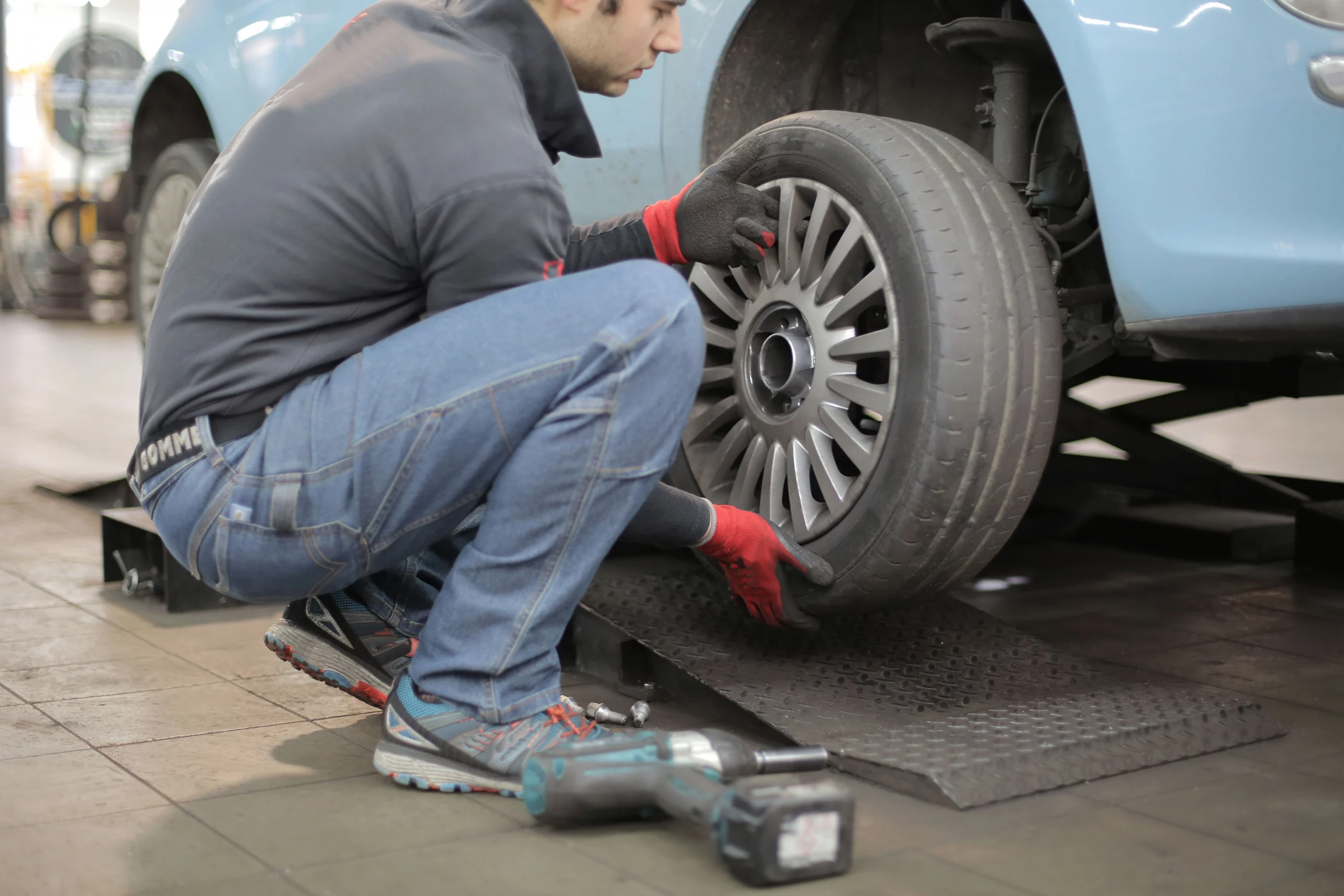
Photo by Andrea Piacquadio
Signs Your Vehicle May Need a Tire Rotation
Watch for these common warning signs:
- Uneven tread wear
- Steering wheel vibration
- Increased road noise
- Vehicle pulling to one side
- One tire wearing faster than the others
- Over 10,000 km since your last rotation
If you notice any of these symptoms, it's a good time to schedule a tire inspection.
Don't Forget Your Wheel Alignment
Many drivers confuse tire rotations with wheel alignments. They work together — but they're different services. A tire rotation moves tires to different positions to promote even wear. A wheel alignment adjusts suspension angles to ensure the wheels point correctly, preventing premature tire wear and improving steering. If your tires are wearing unevenly, your technician may recommend both services.
Tire Pressure Matters Too
Rotating your tires is the perfect time to check tire pressure, tread depth, valve stems, and overall tire condition. Proper inflation improves tire life, fuel economy, braking, and ride comfort.
Professional Tire Rotations at Arman Fine Auto & Repair Center
At Arman Fine Auto & Repair Center, every tire rotation includes a thorough visual inspection to help identify potential issues before they become major repairs. Our technicians inspect tire tread depth, tire pressure, uneven wear, sidewall condition, wheel condition, brake components, suspension components, and visible leaks or damage.
Save 30% on Labour for Tire Services with Our Premium Membership
Routine maintenance should be affordable. That's why our Premium Membership helps Premium Members save 30% off labour on eligible services for an entire year. For just $99 CAD annually, members enjoy the following savings:
| Service | Regular Price | Member Price |
|---|---|---|
| Tire Rotation | $45 | $32 |
| Four-Wheel Alignment | $130 | $91 |
| Tire Mount & Balance | $140 | $98 |
| Conventional Oil Change | $55 | $39 |
| Full Synthetic Oil Change | $110 | $77 |
| Brake Inspection | $85 | $60 |
Pricing shown is averaged and may vary by vehicle. A firm quote is always confirmed before work begins.
Whether you're a daily commuter or drive for Uber, Lyft, Uber Eats, DoorDash, SkipTheDishes, Instacart, or another delivery service, regular tire maintenance can help reduce long-term operating costs.
Why Drivers Choose Arman Fine Auto & Repair Center
Drivers across North York, Toronto, Vaughan, York University, Downsview, Finch, Weston Road, and the Greater Toronto Area trust us because we provide:
- Honest recommendations
- Family-owned customer service
- Experienced technicians
- Modern diagnostic equipment
- Quality workmanship
- Fair and transparent pricing
- Fast turnaround times
- Premium Membership labour savings
We believe preventative maintenance is one of the smartest investments you can make in your vehicle.
Book Your Tire Rotation Today
If it's been several thousand kilometres since your last tire rotation — or you've noticed uneven tread wear, vibration, or reduced handling — don't wait until your tires wear out prematurely.
At Arman Fine Auto & Repair Center, our experienced technicians provide professional tire rotations, wheel alignments, tire inspections, and complete vehicle maintenance to help keep you safely on the road.
We proudly serve drivers throughout North York, Toronto, Vaughan, and the Greater Toronto Area. Protect your tires today and enjoy a smoother, safer drive tomorrow.
Book Your Tire RotationFrequently Asked Questions
How often should tires be rotated?
Most vehicles benefit from a tire rotation every 8,000 to 10,000 kilometres, or according to the schedule recommended by the vehicle manufacturer.
Can I rotate my own tires?
If you have the proper tools, equipment, and know the correct rotation pattern for your vehicle, it is possible. However, a professional service also includes an inspection for tire wear, brake condition, and suspension issues that might otherwise go unnoticed.
Does rotating tires improve fuel economy?
Yes. Evenly worn and properly inflated tires can reduce rolling resistance, which may improve fuel efficiency.
Will a tire rotation fix uneven tire wear?
A tire rotation helps prevent further uneven wear, but if the wear is caused by poor alignment, suspension problems, or incorrect tire pressure, those issues should be corrected as well.
Should I rotate my tires when I change my oil?
Many drivers rotate their tires during every second oil change, making it an easy way to stay on schedule and extend tire life.
Related Articles
- All-Season vs. Winter Tires
- How Long Does a Car Battery Last?
- Why Is My Check Engine Light On?
- What Your Check Engine Light Means
- Summer Car Maintenance Checklist
- Signs Your Vehicle Needs a Wheel Alignment
- Signs Your Brakes Need Replacing
- How Often Should You Change Your Oil?
- How to Know When You Need New Tires
- How to Change a Flat Tire Safely
- Introducing Our Premium Membership Program