


Wheel Balancing vs. Wheel Alignment: What's the Difference?

Steering wheel shaking? Car drifting to one side? You've probably been told you need a "balance" or an "alignment" — and it's easy to assume they're the same fix. They're not. In short, here's the simplest way to remember it:
Wheel balancing is about how smoothly the wheel rotates. Meanwhile, wheel alignment is about how the wheels are positioned and how the vehicle tracks down the road.
What Is Wheel Balancing?
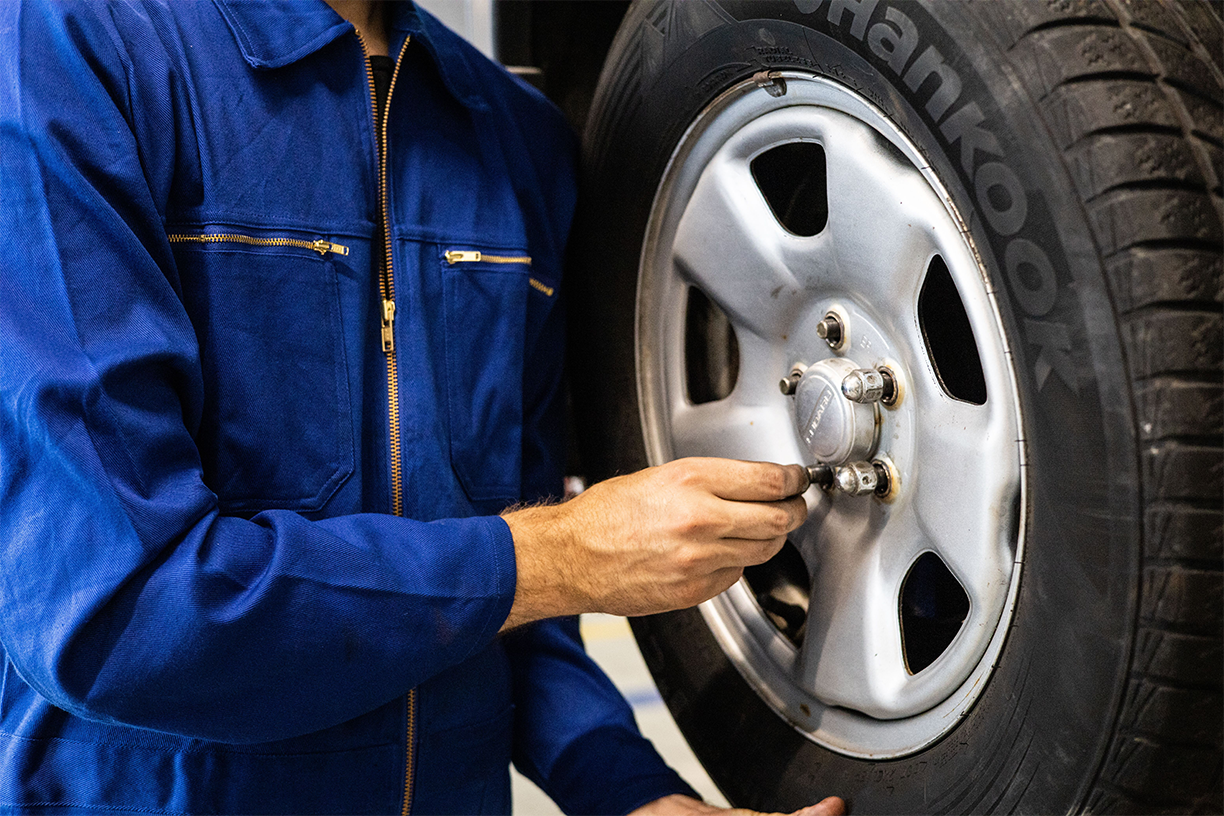
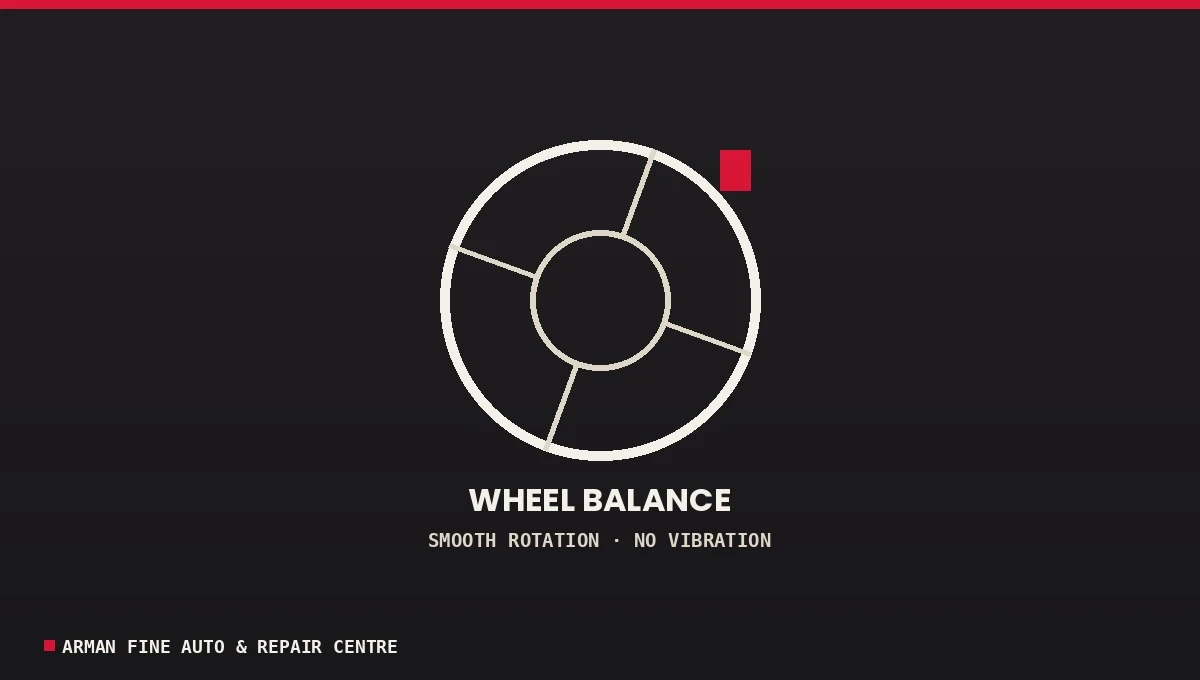
Every tire and wheel assembly has tiny variations in weight distribution. At highway speed, even a small imbalance creates noticeable vibration — think of a washing machine spinning slightly off-balance. To fix it, a technician mounts the wheel on balancing equipment and adds small weights at precise points until it rotates smoothly.
Common causes of imbalance: normal tire wear, a lost wheel weight (potholes, curbs, corrosion), a newly installed tire, or a bent wheel.
What Is Wheel Alignment?
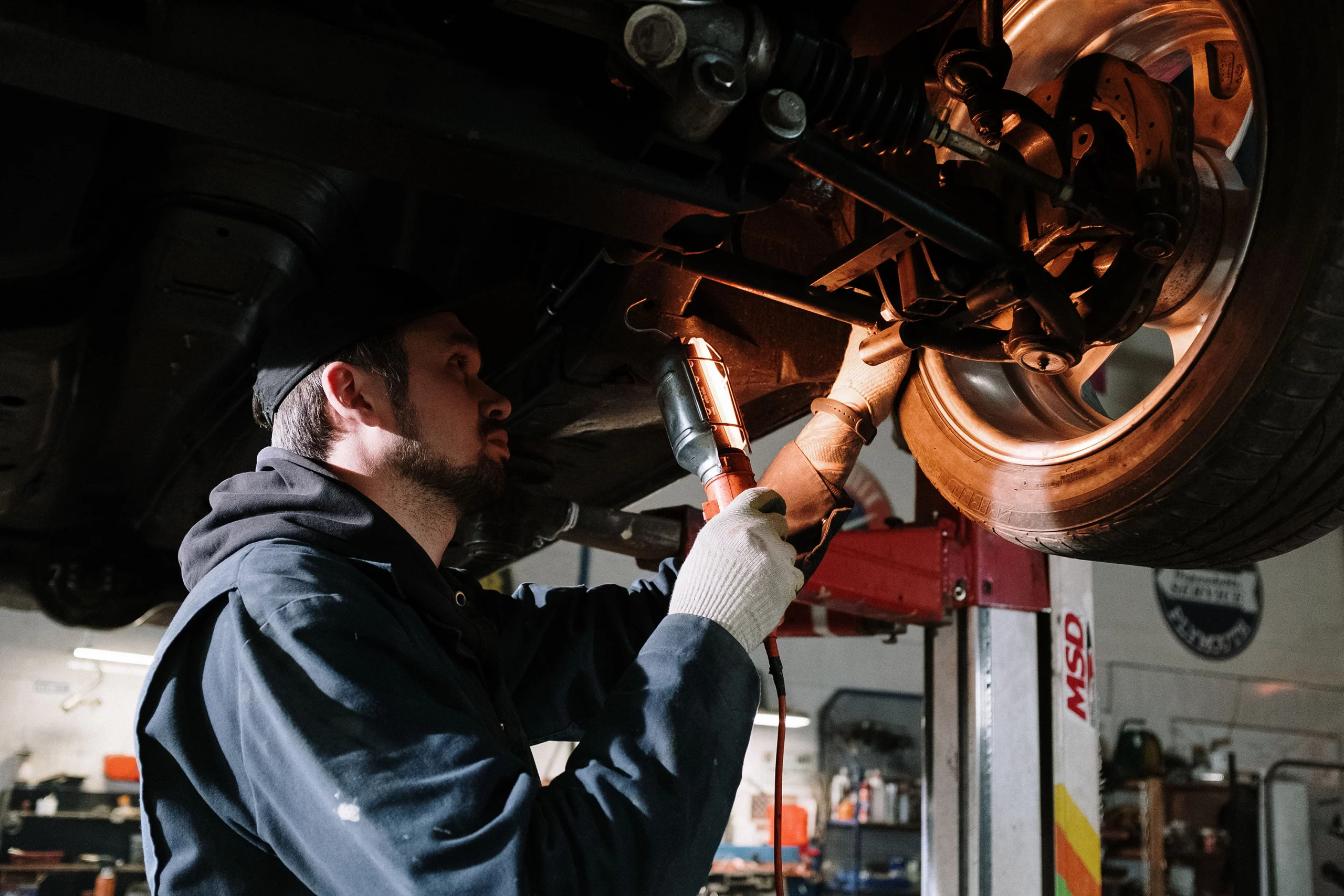
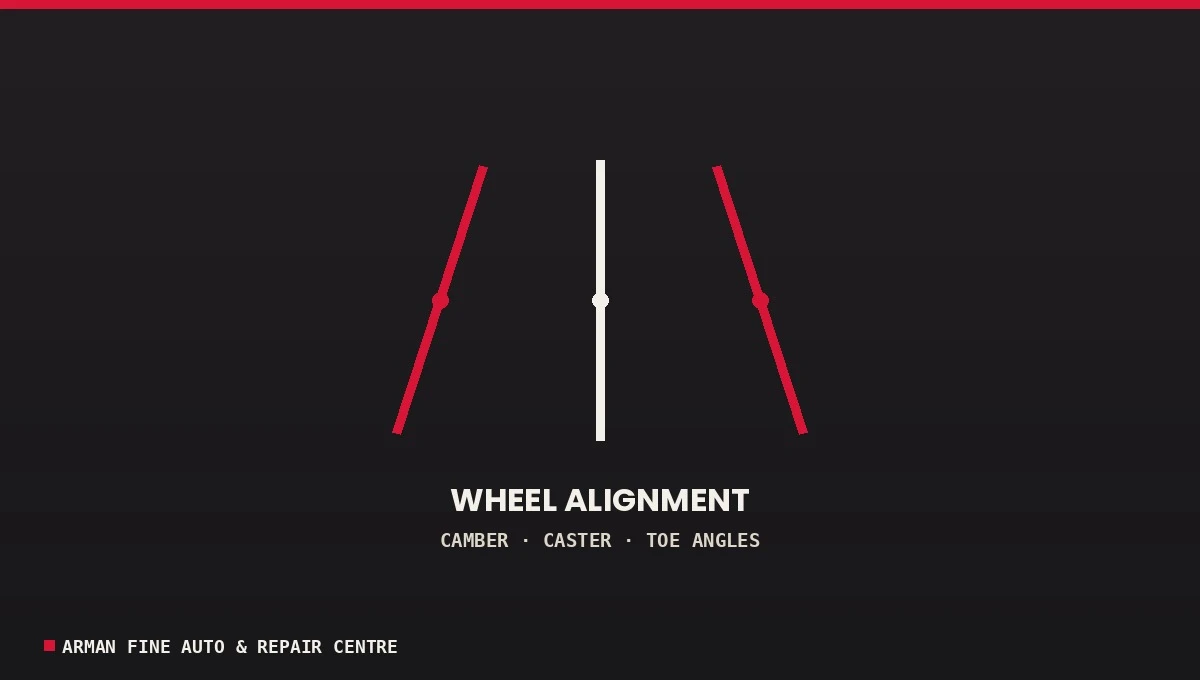
Alignment adjusts your steering and suspension angles — camber, caster, and toe — so your wheels sit exactly where the manufacturer specifies. In other words, it doesn't touch the wheel's balance at all; it's a completely separate adjustment.
| Symptom | Wheel Balancing | Wheel Alignment |
|---|---|---|
| Primary purpose | Correct weight distribution | Correct suspension angles |
| Steering-wheel vibration | Common reason | Possible, but not typical |
| Vehicle pulls to one side | No | Common reason |
| Uneven tire wear | Indirect at best | Common reason |
| Crooked steering wheel | No | Often |
| Needed after new tires | Yes, always | Recommended check |
Can You Need Both?
Absolutely — a hard pothole impact can knock a wheel weight loose and throw off your alignment at the same time. If you're experiencing both vibration and pulling, don't assume one service will fix everything. Instead, get it properly diagnosed.
- Steering-wheel vibration at highway speed → check balance
- Vehicle pulls left or right → check alignment
- Steering wheel sits crooked → check alignment
- Tires wearing unevenly → check alignment & suspension
- New tires just installed → balancing required, alignment recommended
- Recently hit a major pothole → check both
In fact, uneven tire wear from poor alignment can wear out a brand-new set of tires far faster than expected. If you are installing new tires soon, it is the smart time to also check your alignment — see our Signs Your Vehicle Needs a Wheel Alignment guide.
Wheels, Tires, and TireShop.World
Balancing and alignment protect the investment you've already made in your tires — but if you're shopping for a fresh set altogether, our tire-focused wing TireShop.world has quickly become one of the most straightforward places in North York and Toronto to compare tires without the upsell.
Vibration, Pulling, or Both?
Ultimately, tell us exactly what you're noticing and we'll diagnose the real cause — balance, alignment, or something else entirely.
In addition, we provide tire mounting, computer balancing, and full wheel alignment services across North York, Toronto, Vaughan, and the GTA.
Book A Wheel ServiceFrequently Asked Questions
Will a wheel balance fix my car pulling to one side?
In short, no — pulling is almost always an alignment, tire pressure, or suspension issue, not a balance issue.
Do I need an alignment every time I get new tires?
Not automatically, but it's a smart time to check, especially if your old tires wore unevenly.
How do I know if it's a balance or an alignment problem?
Vibration that appears at highway speed usually points to balance. Similarly, pulling, a crooked steering wheel, or uneven tire wear usually points to alignment.