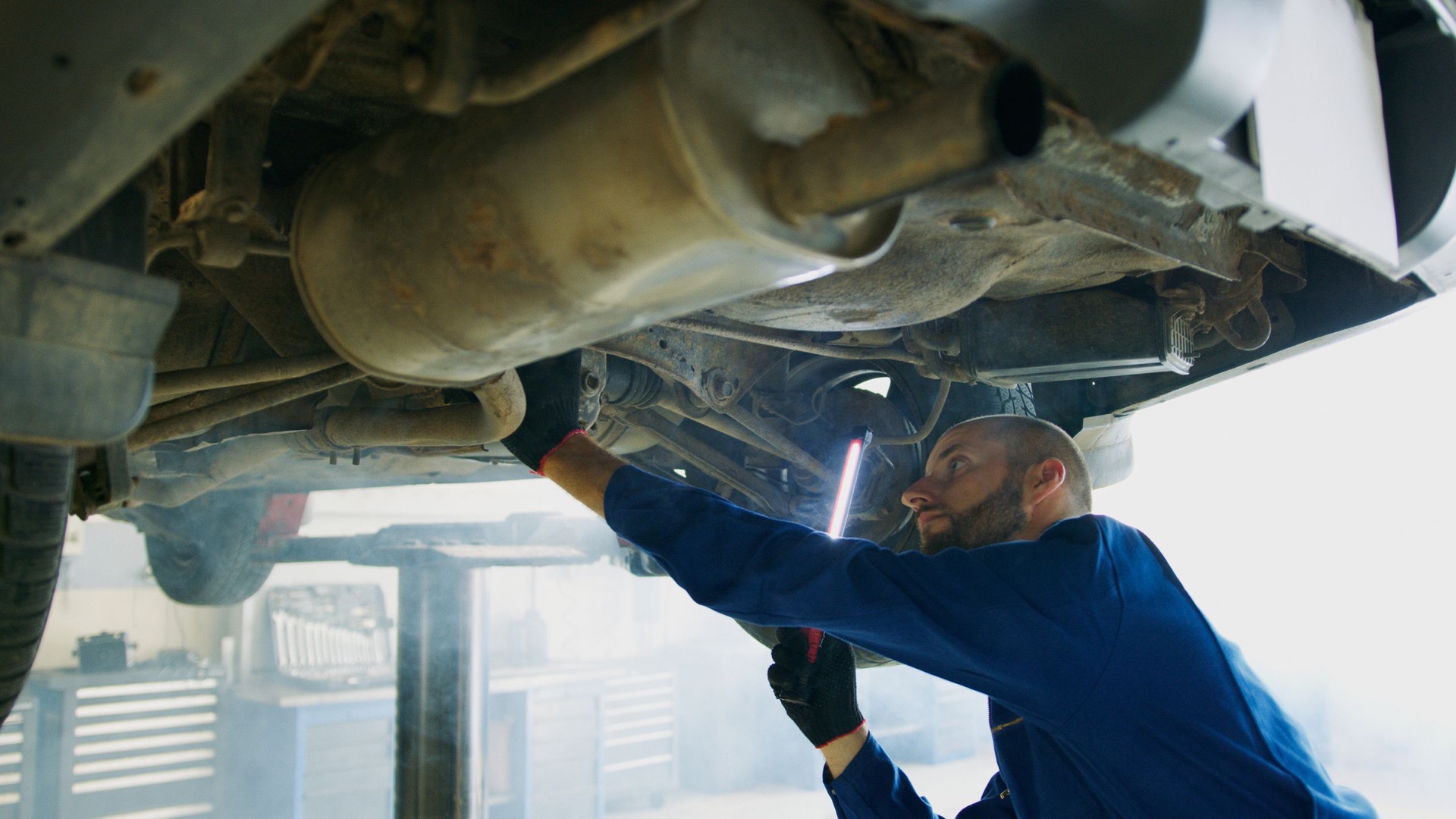
A healthy muffler does more than keep your car quiet. It's part of the exhaust system, cutting engine noise while letting exhaust gases flow the way the system was designed.
Over time, heat, moisture, road salt, vibration and corrosion wear the muffler and the parts around it. The first clue might be a deeper exhaust note, a metallic rattle or a patch of rust underneath. Sometimes it's obvious: the car is suddenly much louder than it used to be.
The real question is whether you need a simple repair, a new muffler, or a closer look at the whole exhaust system. Here's how mufflers work, why they fail, which symptoms to watch for, and when to get the car checked.
Has your car started sounding louder or rattling underneath lately?
What does a muffler do?
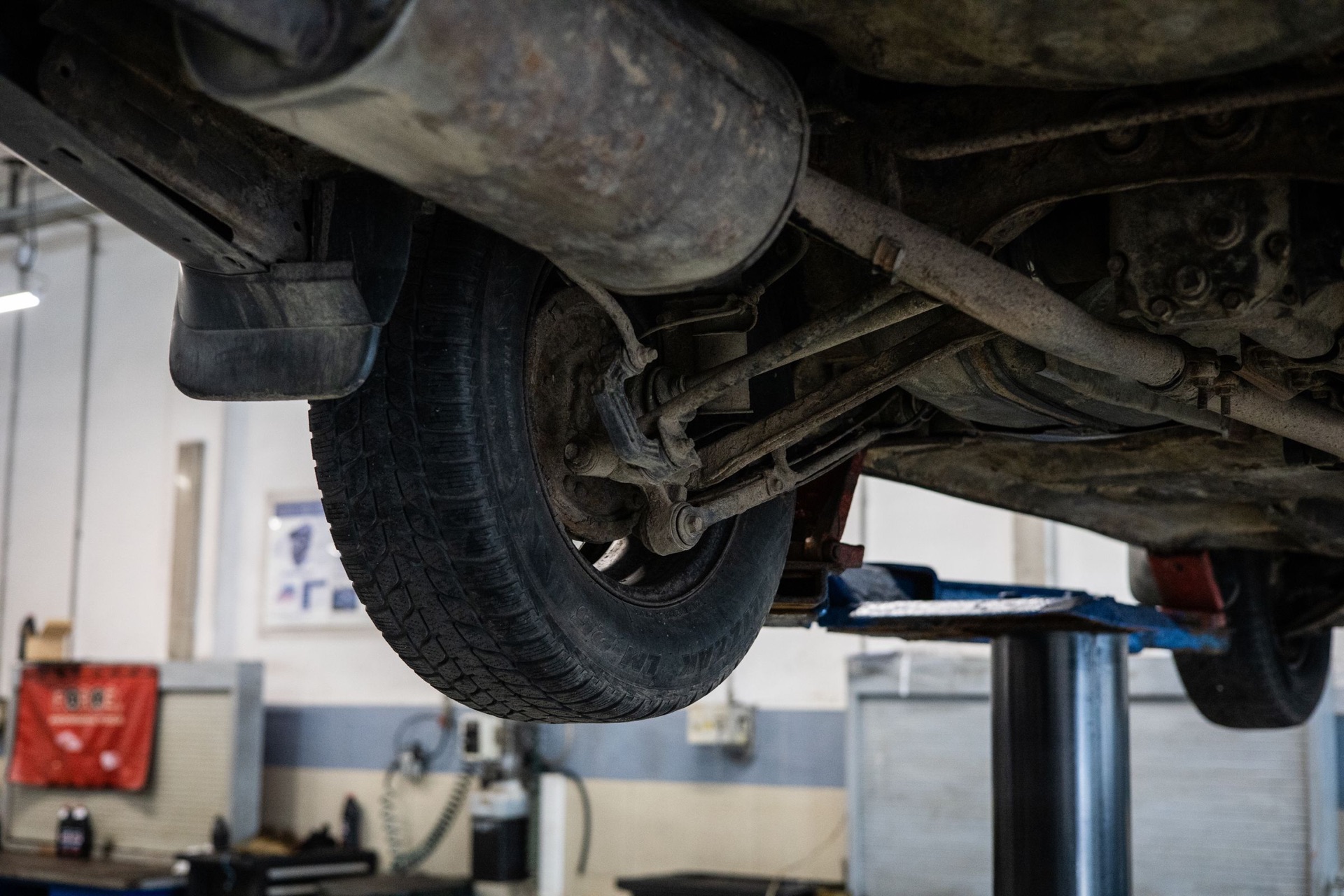
A muffler is designed mainly to reduce engine noise. Inside, chambers, passages and sometimes sound-absorbing material control the sound waves the engine produces.
The rest of the exhaust system carries combustion gases away from the engine and out the tailpipe. Depending on the vehicle, it can include:
- Exhaust manifolds or headers
- Exhaust pipes
- Catalytic converters
- Resonators
- Mufflers
- Oxygen sensors and other emissions parts
- Hangers, clamps and gaskets
Each part has its own job. A muffler is not a catalytic converter, and replacing one won't fix a problem with the other.
Seven warning signs of a bad muffler
1. The car is suddenly much louder
A noticeable jump in exhaust noise is one of the most common signs. A hole, split seam, failed connection or damaged pipe lets sound escape before it reaches the outlet. If your car suddenly sounds unusually loud, have it inspected rather than assuming the change is harmless.
2. Rattling underneath the vehicle
A loose internal part, broken hanger, damaged heat shield or failing exhaust connection can all rattle. You'll often hear it when accelerating, starting the engine or driving over bumps. Not every exhaust rattle comes from the muffler, so the source should be found before any parts are replaced.
3. Rust or holes
Exhaust parts heat up and cool down over and over. Moisture collects inside, while water, salt and road debris attack the outside. In Canadian winters, road salt makes corrosion a bigger problem. Surface discolouration doesn't always mean a part needs replacing, but deep corrosion, holes and weakened seams deserve attention.
4. You smell exhaust fumes
A leak can let fumes escape where they shouldn't. Exhaust fumes inside the cabin are a safety concern: carbon monoxide is poisonous and can't be reliably detected by smell (see carbon monoxide poisoning).
If you suspect fumes are getting into the cabin, stop when it's safe, get everyone into fresh air and call for help. Opening a window is not a fix.
5. Hissing or popping
A damaged gasket, loose connection, cracked pipe or other exhaust fault can hiss, tick or pop. These sounds often start farther up the system than the muffler, so a proper inspection saves you from replacing the wrong part.
6. The car feels different
A badly restricted or damaged exhaust can affect engine performance, but a louder muffler on its own doesn't mean the engine has lost power. If the car struggles to accelerate, runs unusually or shows a warning light, the cause may be another exhaust part or an engine-management problem. Our guide to diagnosing warning lights covers the common causes.
7. Damaged pipes or hangers
The muffler hangs from hangers and mounting points. If these break or wear out, the exhaust can sag, vibrate or hit the underside of the car, and that movement can damage other parts.
Does the noise change when you accelerate or go over bumps?
Can a muffler be repaired, or does it need replacing?
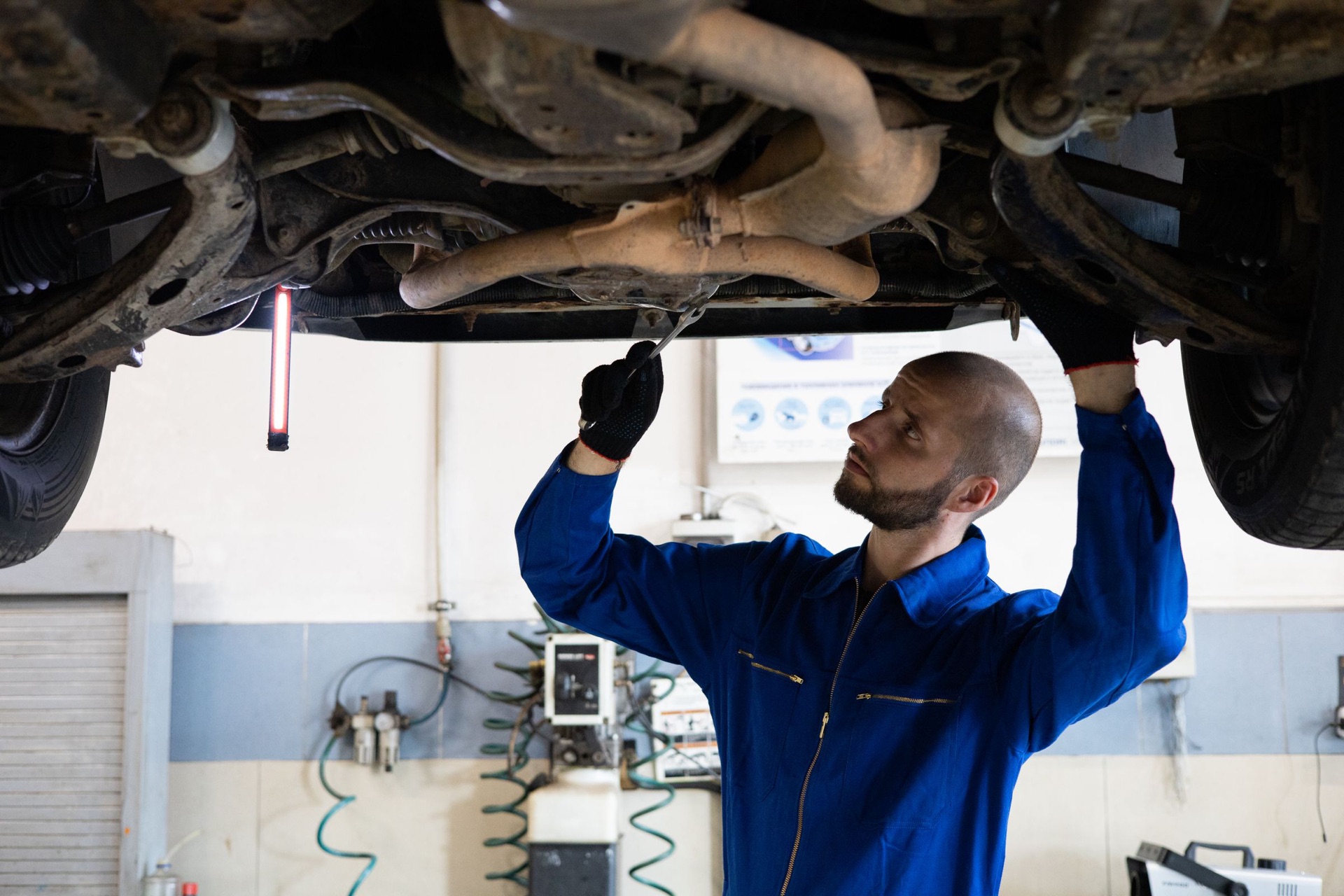
The right repair depends on where the damage is and how bad it is.
| Problem | Possible solution |
|---|---|
| Loose exhaust hanger | Repair or replace the hanger |
| Failed clamp or gasket | Replace the damaged connection |
| Local damage to a repairable pipe | Repair or replace that section |
| Deep corrosion or several holes | Replace the affected part |
| Internal muffler damage | Muffler replacement may be needed |
| Catalytic converter fault | Diagnose the converter and related systems separately |
A small, accessible problem may be repairable. Patching badly corroded metal, though, is rarely a lasting fix. The best repair restores a safe, secure exhaust and deals with the real cause of the noise or leak.
Does a bad muffler affect fuel economy?
Not automatically. A serious exhaust restriction, a leak upstream that throws off sensor readings, or a related engine-management fault can affect how the engine runs. If your fuel use changes noticeably, have the car diagnosed rather than assuming the muffler is to blame. A catalytic converter or sensor problem is a different repair altogether.
Is it safe to drive with a bad muffler?
It depends on the problem. A rattle from a loose heat shield is very different from a major exhaust leak or a part hanging close to the road.
Don't keep driving if fumes are entering the cabin, the exhaust is dragging, or you suspect a dangerous leak. Arrange an inspection, and a tow if needed. Even when the car is still drivable, putting off the repair can let a small problem damage other parts.
Is anything hanging lower under your car than it used to?
How to help prevent exhaust problems
- Have unusual exhaust noises checked early
- Keep up with routine maintenance
- Ask for an underside inspection if corrosion worries you
- Fix loose hangers before they damage pipes or joints
- Don't assume every rattle comes from the muffler
Drivers in North York and across the GTA should keep an eye on corrosion, because winter road conditions can speed up exhaust wear. Regular preventative maintenance visits are a good time to have the underside looked at.
Prices are starting prices from our shop menu. Your exact price depends on the vehicle and parts, and we always confirm a firm quote before any chargeable work begins.
Unusual noise, rattling, rust or exhaust smells are all reasons to look into the problem rather than live with it. If your exhaust has changed its tune, book a vehicle inspection and repair visit. We find the cause first, then recommend a safe repair that suits your car.
Exhaust louder or rattling?
We put the car on the hoist, find where the noise or leak is coming from, and quote the right repair before any work. Noise and vibration diagnosis from $100.