




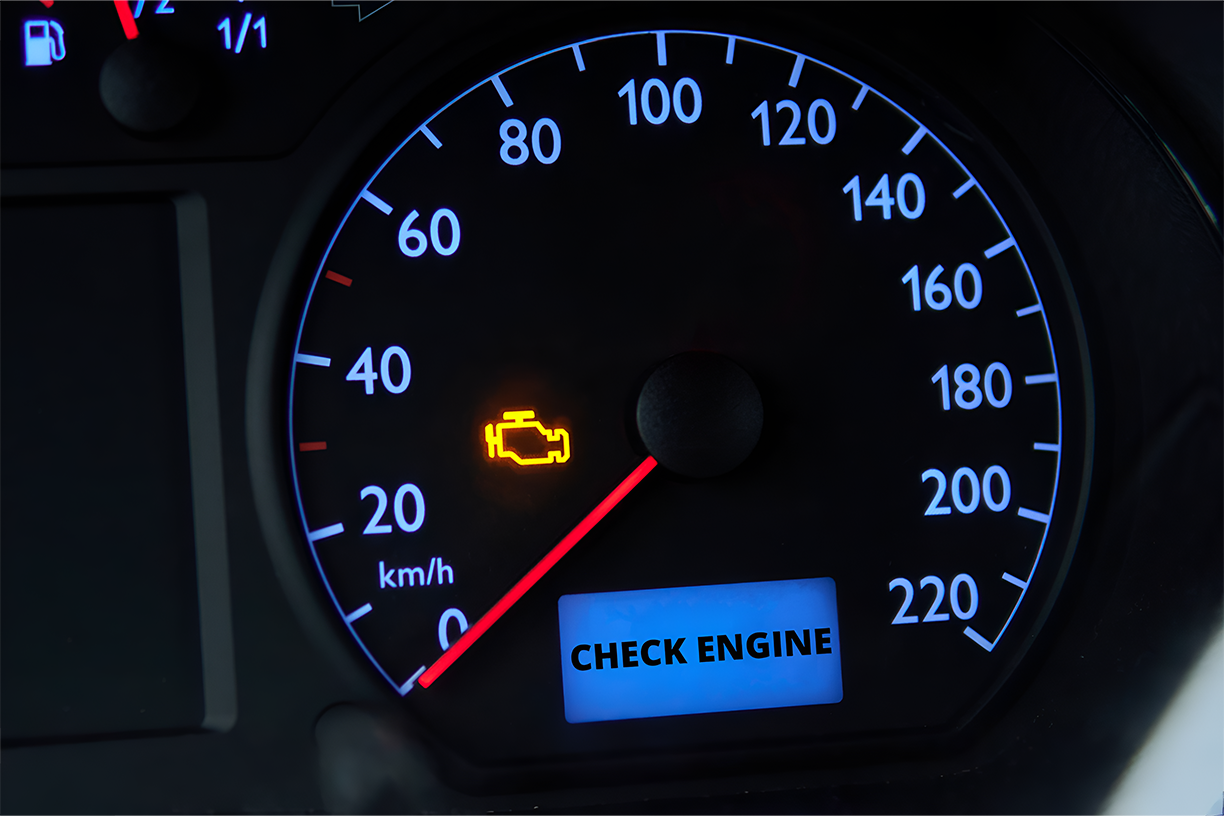
Why Is My Check Engine Light On? Common Causes Every Driver Should Know

Few dashboard warnings cause as much concern as the Check Engine Light. One moment your vehicle seems perfectly fine, and the next you're wondering if it's safe to keep driving or if you're about to face an expensive repair.
The good news is that a check engine light doesn't always mean something serious — but it should never be ignored.
Whether you're driving through North York, Toronto, Vaughan, or anywhere in the Greater Toronto Area, understanding why your check engine light came on can help you avoid larger problems and unexpected repair bills. At Arman Fine Auto & Repair Center, we use professional diagnostic equipment to identify the cause of your warning light accurately so you can make informed decisions about your vehicle.
What Is the Check Engine Light?
The Check Engine Light is part of your vehicle's onboard diagnostic system (OBD-II). Your vehicle continuously monitors dozens of systems, including engine performance, fuel system, ignition system, emissions components, sensors, and transmission operation (on many vehicles). When the computer detects something operating outside normal specifications, it stores a diagnostic trouble code (DTC) and illuminates the Check Engine Light. The light is telling you that your vehicle needs attention — it isn't identifying the exact problem.
10 Common Reasons Your Check Engine Light Is On
1. Loose or Damaged Gas Cap
One of the simplest causes is a loose, cracked, or missing fuel cap. A damaged seal can allow fuel vapours to escape and trigger the emissions system. Always tighten the gas cap until it clicks.
2. Faulty Oxygen Sensor
Oxygen sensors monitor the air-fuel mixture entering and leaving the engine. A failing sensor may reduce fuel economy, increase emissions, and affect engine performance.
3. Worn Spark Plugs or Ignition Coils
Misfires caused by worn ignition components often trigger the Check Engine Light. Symptoms may include rough idle, poor acceleration, reduced fuel economy, and engine hesitation.
4. Catalytic Converter Issues
The catalytic converter helps reduce harmful exhaust emissions. Problems may cause reduced engine performance, poor fuel economy, a sulphur or "rotten egg" smell, and failed emissions tests.
5. Mass Air Flow (MAF) Sensor Problems
The MAF sensor measures incoming air entering the engine. If it fails, the engine may receive the wrong fuel mixture.
6. EVAP System Leak
Small leaks in the evaporative emissions system are common. Although they usually don't affect drivability immediately, they should still be repaired.
7. Vacuum Leaks
A damaged vacuum hose can create rough idle, poor acceleration, and increased fuel consumption.
8. Battery or Charging System Issues
Low system voltage sometimes triggers multiple warning lights and fault codes. A battery or alternator inspection may be recommended.
9. Fuel System Problems
Fuel injectors, pumps, or pressure regulators can all contribute to engine performance issues.
10. Sensor or Electrical Problems. Modern vehicles rely on many electronic sensors. Occasionally, a sensor itself — not the engine — is the source of the warning. Professional diagnostics identify the difference.
Flashing vs. Solid Check Engine Light
Solid Check Engine Light generally indicates a fault that should be diagnosed soon. The vehicle may still drive normally, but delaying repairs can sometimes make the issue worse.
Flashing Check Engine Light often indicates an active engine misfire. Continued driving may damage the catalytic converter. If your check engine light begins flashing, reduce speed and arrange for your vehicle to be inspected as soon as it is safe to do so.
Can I Continue Driving?
It depends. If the light is solid, the vehicle feels normal, and no unusual noises are present, you may be able to drive a short distance to a repair facility. However, if the light is flashing or you notice poor performance, overheating, smoke, unusual noises, or significant vibrations, it's safest to stop driving and have the vehicle assessed.

Photo by Gustavo Fring
Professional Diagnostics at Arman Fine Auto & Repair Center
Guessing can become expensive. Our technicians use professional diagnostic equipment to retrieve fault codes, perform inspections, and identify the underlying cause before recommending repairs. We believe in explaining what we find clearly so you understand your options.
Save 30% on Labour with Our Premium Membership
Vehicle maintenance is easier when it fits your budget. For just $99 CAD per year, our Premium Membership gives members 30% off labour on eligible services, including diagnostics, maintenance, brake service, tire services, wheel alignments, oil changes, and much more. It's especially valuable for Uber, Lyft, delivery drivers, and anyone who depends on their vehicle every day.
Book a Check Engine Light Diagnosis Today
If your Check Engine Light has come on, don't ignore it. Whether the cause is simple or more complex, our experienced technicians can accurately diagnose the issue and help keep your vehicle running safely.
We proudly serve drivers throughout North York, Toronto, Vaughan, and the Greater Toronto Area.
Book A DiagnosticFrequently Asked Questions
What's the first thing I should check if my light comes on?
Start by checking that your gas cap is tightened until it clicks — it's one of the simplest and most common causes of an illuminated check engine light.
Can a check engine light turn off on its own?
In some cases, if the underlying issue resolves itself (such as a loose gas cap being tightened), the light may turn off after several successful drive cycles. If it stays on, a diagnostic check is recommended.
Does a check engine light always mean a costly repair?
Not necessarily. Causes range from a simple loose gas cap to more involved sensor or ignition issues. A diagnostic inspection is the only way to know for certain.
Is it bad to ignore the check engine light?
Yes. Ignoring it, especially a flashing light, can allow a minor issue to develop into a more expensive repair, such as catalytic converter damage.
How long does a diagnostic inspection take?
Most diagnostic inspections can be completed same-day, allowing our technicians to identify the cause and explain your options quickly.
Related Articles
- Battery Boost vs. Battery Replacement
- How Long Does a Car Battery Last?
- What Your Check Engine Light Means
- Tire Rotation Guide
- Summer Car Maintenance Checklist
- Signs Your Vehicle Needs a Wheel Alignment
- Signs Your Brakes Need Replacing
- How Often Should You Change Your Oil?
- How to Know When You Need New Tires
- How to Change a Flat Tire Safely
- Introducing Our Premium Membership Program